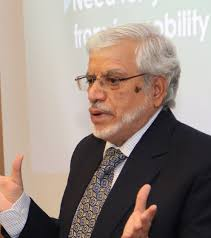
MUHAMMAD AKRAM KHAN
Ex-Deputy Auditor-General, Pakistan
Distinguished Scholar of Islamic Economics
Pioneer of Performance Auditing Methodology
Prelude: A Life of Dual Distinction
Some lives unfold like quiet constellations — points of dedication, thought, and service that,when viewed together,form a pattern of uncommon brilliance. Mr. Muhammad Akram Khan’s story is no different. His path through public auditing, defined by integrity,dedication and quiet hard work, runs in graceful parallel with his lifelong devotion to Islamic economic thought.Together, these journeys reveal a mind equally at home in the assurance of governance and the expansiveness of scholarship, leaving behind a radiance that continues to guide both the practitioners of accountability and the seekers of economic wisdom.
Mr. Muhammad Akram Khan was born on 3 April 1945,at the threshold of a nation’s awakening,when the idea of Pakistan had gathered wider acceptance and form. His childhood unfolded in the quiet shadow of independence, as the young state labored to shape its institutions and define its destiny. Nurtured by this atmosphere of purposeful emergence, he spent his formative youthful years in a world that would, in time, leave a lasting imprint on him.
The Foundation: Academic Excellence and Early Promise
Mr. Muhammad Akram Khan's academic journey began with a brilliance that would prove prophetic of his future achievements. At the Punjab University, Lahore – one of the subcontinent's most venerable institutions of higher learning – he pursued his Bachelor of Commerce with Honours, graduating in 1966 with a Gold Medal that distinguished him as the most outstanding student of his cohort.
The following year, 1967, witnessed the continuation of this academic excellence when he completed his Master of Commerce, once again earning the Gold Medal from the Punjab University. This successive demonstration of scholarly excellence established him as a figure of exceptional promise, someone whose intellectual gifts and academic experiences foreboded a life of analytical thinking and systematic inquiry.
Seeking to expand his intellectual horizons and gain international exposure to contemporary management thought, Mr. Khan went to the United Kingdom, where he enrolled at the University of Aston in Birmingham. There, he pursued advanced studies in Industrial Administration, earning his Master of Science degree in 1971. The exposure to the British administrative practices, combined with his deep understanding of Pakistani institutional contexts, enabled him to synthesise different governance traditions and adapt international best practices to local situations – a skill that would distinguish him among his peers.
Mr. Khan further supplemented his knowledge when he became the Fellow (1984) of the Canadian Comprehensive Auditing Foundation, Ottawa, Canada, Sponsoring Governor (1990) of the Association of Accounting Technicians (now rechristened as Pakistan Institute of Public Finance and Accounting), and Member (1983) of the Institute of Internal Auditors, Florida, USA.
Ascending the Ladder: Three Decades of Public Service
In 1970, Mr. Muhammad Akram Khan entered the august ranks of Pakistan’s Central Superior Services, starting his journey on the path of public service that would unfold with distinction for more than three decades in the Department of the Auditor-General of Pakistan.
His career was not merely a steady climb through official titles, but an ascent shaped by discipline, discernment, and a deep reverence for public trust..jpg) With each successive higher responsibility on the ladder, his reputation for analytical depth, probity, and unique professional insight was acknowledged at the top.
With each successive higher responsibility on the ladder, his reputation for analytical depth, probity, and unique professional insight was acknowledged at the top.
Across a wide spectrum of audit assignments, he acquired a commanding understanding of the architecture of public accountability—spanning revenue, expenditure, compliance, and financial scrutiny. Yet his vision reached beyond the arithmetic of accounts. He perceived the unspoken questions behind the figures: how wisely public resources were deployed, how effectively institutions performed, and how carefully public power was exercised. These reflections would later inform his forward-looking contributions to performance auditing.His elevation as Deputy Auditor General in 1999 marked the culmination of long years of public service. In this high office, he exercised strategic stewardship over critical segments of the national audit system, guiding reforms in methodology, standards, and institutional ethos. Throughout his career, he stood as a quiet sentinel of transparency and accountability—strengthening the moral and professional sinews of governance. He understood that effective audit functions serve as essential bulwarks against corruption, inefficiency, and the misuse of public resources. His work contributed to strengthening these institutional mechanisms, leaving an enduring imprint on Pakistan’s public financial oversight.
For over two years (since March 2000), he was Member (Finance) in Pakistan Telecommunication Authority. During his stay in PTA, he developed regulatory framework for the telecom sector in Pakistan, more specifically, a system of license fee, royalty and tariff as well as a pricing model for the introduction of Calling Party Pays for mobile telephones. Mr. Khan also served as Additional Secretary Economic Affairs Division and as the top manager of public debt in Pakistan for over 15 months, he was instrumental in developing a computerised database of public debt, streamlining public debt accounting, developing a monitoring system for debt management and managing debt rescheduling by Paris Club and London Club. Earlier as Chief Accounts Officer, he also prepared and executed the budget of Ministry of Foreign Affairs for over two years (1995-1997).
During his three decade long professional career in the Department of the Auditor-General of Pakistan, his international experience included work as Chairman Board of Auditors, Economic Cooperation Organisation, Tehran in 1996 and Member of the said Board during 1995-97. He was also member of the Board of Auditors for the Organisation of Islamic Countries, Jeddah during 1995-97. His international experience included the delivery of numerous training courses and workshops for auditors in Pakistan, Saudi Arabia, Malaysia and China. He also represented Pakistan at UNCTAD’s Intergovernmental Group of Experts on International Standards of Accounting and Reporting at Geneva during 1998-2000.
Forging a Collective Audit Conscience: The Birth of ECOSAI
Among Mr. Muhammad Akram Khan’s most enduring contributions to the global audit fraternity is his seminal role in the conception and establishment of the Economic Cooperation Organization of Supreme Audit Institutions (ECOSAI). When the Auditor-General of Pakistan .jpg) advanced the proposal for ECOSAI at the Third Meeting of the ECO Technical Committee in January 1993, it was Mr. Khan’s far-sighted vision of regional solidarity and professional cooperation that gave the idea its intellectual and practical momentum.
advanced the proposal for ECOSAI at the Third Meeting of the ECO Technical Committee in January 1993, it was Mr. Khan’s far-sighted vision of regional solidarity and professional cooperation that gave the idea its intellectual and practical momentum.
His leadership proved decisive in translating aspiration into action, culminating in the organization of the first international conference held in Murree, Pakistan, from 7 to 19 April 1994—an event that formally inaugurated ECOSAI as a regional institution of consequence. Today, ECOSAI unites eleven member countries through a dynamic exchange of ideas, shared experiences, and sustained capacity-building initiatives, including seminars, conferences, workshops, and specialized training programmes.
The UN Chapter: Global Service and International Recognition
Following his voluntary retirement in 2003 from the position of Deputy Auditor General, Mr. Khan’s professional voyage expanded to the global stage when during 2003 – 2007, he was entrusted with the responsibilities of Chief Resident Auditor for United Nations Peacekeeping Missions in East Timor (UNMISET), DR Congo (MONUC) and Sudan (UNMIS) under the Office of Internal Oversight Services of the UN Secretariat. This appointment was more than a career transition—it was an international acknowledgment of a lifetime devoted to integrity, discipline, professional excellence, and institutional stewardship.
From 2003 to 2007, he worked with distinction at the heart of some of the world’s most intricate and fragile operations, where peacekeeping was as much a moral imperative as a logistical challenge. Within theatres marked by uncertainty and conflict, he safeguarded the probity of vast financial flows and complex supply chains, ensuring that resources meant for peace, security, and humanitarian relief were deployed with precision, legality, and purpose. His audits extended across procurement systems, asset management, financial controls, and operational efficiency—each review reinforcing the architecture of trust upon which global missions depend.
Revolutionary Contribution: The Architecture of Performance Auditing
Among Mr. Khan’s many professional distinctions, his most transformative gift to public finance lies in the realm of performance auditing—a field he did not merely practise but helped to architect. At a time when public audit remained largely confined to procedural compliance, he discerned a deeper question waiting to be asked: not only whether public money was spent according to rules, but whether it served its true purpose with efficiency, economy, and effectiveness. This shift in vision marked the beginning of a quiet revolution in Pakistan’s audit philosophy.
That revolution found its first definitive expression in his landmark work, Performance Auditing: Concept and Methodology (1987). More than a technical manual, the volume was a philosophical and operational blueprint for a new audit culture. It offered a structured language for planning, evaluating, and reporting performance audits, transforming abstract ideals of efficiency and effectiveness into measurable, auditable realities. The publication became the intellectual cornerstone upon which Pakistan’s performance audit regime was built.
He continued to refine and enrich this framework through a series of specialised works on evidence, case writing, and data analysis in performance auditing. These writings bridged the gap between theory and execution, guiding auditors in how to measure results, interpret data, and present findings with clarity and persuasion. Each contribution sharpened the craft of performance auditing, elevating it from a concept to a disciplined professional science.
Scholarly Pursuit: A Lifetime Devoted to Islamic Economics
Alongside a career marked by public service, Mr. Khan has cultivated what he humbly calls a “private hobby”—the pursuit of Islamic economic thought. Yet this modest characterisation belies the depth and resonance of his contributions. Across decades, he has engaged the field with a rare combination of intellectual rigour, imaginative insight, and practical sensibility, enriching scholarly discourse while shaping the contours of debates on both the philosophical foundations and real-world applications of Islamic economic principles. 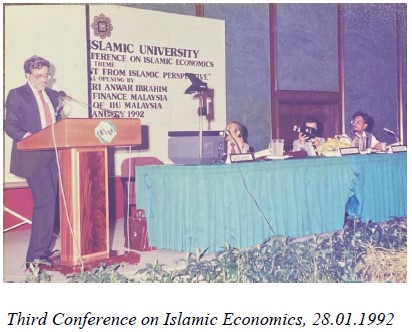
His journey began in youth, with his first article published at the age of twenty, heralding the start of a lifelong dialogue with ideas that would mature alongside his professional life. Even amid the demands of a distinguished public service career, he produced a prodigious body of work :twenty books and fifty-five research papers spanning topics from resource allocationand development economics to zakah administration and the philosophical underpinnings of Islamic finance. His writings on Islamic banking and zakah exemplify a rare ability to unite theory and practice, illuminating both conceptual frameworks and the challenges of real-world implementation.
Drawing on decades of hands-on experience in auditing and public finance, he brings to Islamic economic scholarship a perspective at once disciplined, grounded, and profoundly insightful—a synthesis of intellect and practice that elevates both the study and the application of Islamic economic thought.
The long arc of Mr. Khan’s engagement with Islamic economics found its fullest expression in his magnum opus, What Is Wrong with Islamic Economics: Analysing the Present State and Future Agenda, published in 2013. This work stands as the distilled essence of nearly five decades of reflection, inquiry, and intellectual struggle with the promises and paradoxes of the discipline. It is not merely a book, but a summation—where a lifetime of questioning matures into measured judgment.
The very title announces its bold temper: unsparing, self-reflective, and courageous in its refusal to settle for comfort or consensus. Rather than defending the field through reverence, he interrogates it through reason—asking whether Islamic economics has achieved true theoretical distinction, whether its institutions embody substance over form, and whether its methods can meet the demands of a changing world. Yet the book is not an exercise in negation alone. From critique, he moves deliberately toward reconstruction—outlining a future agenda grounded in intellectual honesty, methodological discipline, and institutional realism.
Another book authored by Mr. Muhammad Akram Khan was published in 2024 and is titled “Islamic Economics and Human Well-being: Justice, Moderation and Sharing”. This study provides an interesting complement to conventional economics as they both study economic behaviour to enhance human well-being. In the words of an admirer: this book strikes as a fresh, original and open-minded study of what an economy that applies Islamic principles in the setting of the 21st century should look like.
The Wider Canvas: Prolific Authorship and Scholarly Contribution
Beyond his landmark contributions to performance auditing and Islamic economics lies a wider landscape of scholarship that reveals the full range of Mr. Khan’s intellectual versatility. His authorship moves with ease between technical precision and philosophical reflection, between the mechanics of audit practice and the moral architecture of economic systems. In the domain of auditing alone, his corpus of fifteen books forms a comprehensive professional library for the public sector auditor. His numerous research papers further engage with the evolving ethical, institutional, and methodological challenges of auditing—probing questions of integrity, legislative oversight, system-based approaches, and even the measurement of efficiency within audit organisations themselves.
What sets Mr. Khan’s scholarship apart is the graceful interplay of analytical precision, reflective inquiry, and experiential wisdom. He probes assumptions, interrogates methodologies, and engages deeply with existing literature, while his ninety-plus book reviews demonstrate sustained dialogue with the evolving field. Together, these writings portray not merely a prolific author, but a tireless participant in the collective conversation of knowledge—one who questioned rigorously, wrote responsibly, and contributed consistently to the refinement of two vital fields of thought.
International Presence: Conferences, Workshops, and Global Engagement
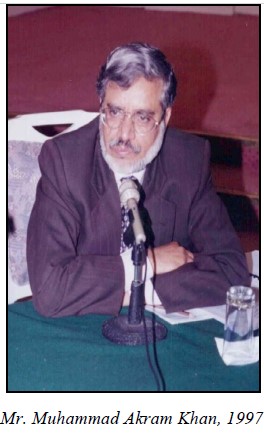
Across continents and decades, Mr. Khan’s voice has resonated in some of the world’s most distinguished academic and professional forums, where he has been invited as a presenter, discussant, facilitator, and keynote speaker. From Makkah to Toronto, Beijing to Geneva, Kuala Lumpur to Washington, his intellectual journey has traced a global map of engagement in both auditing and Islamic economics. At seminal international conferences on Islamic economics and zakah, he contributed to formative debates that shaped emerging institutions and policies, offering insights drawn from both theory and lived national experience.
Equally far-reaching has been his international presence in the field of public auditing and governance. Through seminars in Europe, Asia, and North America, and through collaborative initiatives between audit institutions, he shared Pakistan’s evolving approaches to performance auditing while absorbing global best practices. His consultancy assignments with leading international organisations further extended this influence, placing his expertise at the service of anti-corruption efforts, public financial management, and development coordination.
In 2009, he worked as a consultant for the Food and Agriculture Organisation and conducted performance audit of the FAO’s Missions in Somalia and Sudan. During 2008, he wrote several research papers on various aspects of auditing, financial management and accountability for the World Bank Institute, besides consulting for the Organisation for Security and Control in Europe (OSCE) as an Audit Consultant. As a consultant of OSCE, he trained auditors in performance auditing and also supervised a real-life audit. He also developed a Policy Note on Public Financial Management of Pakistan for the World Bank during 2012-13.
Collectively, these global engagements carried his ideas beyond borders, fostered enduring professional networks, and quietly positioned Pakistan within the wider community of international governance and accountability thought.
Pedagogy and Institutional Development:Training the Next Generation
Running beneath Mr. Khan’s many personal achievements is a quiet yet powerful devotion to building minds and institutions. He understood that no reform endures unless it is carried forward by capable hands and disciplined thought. Throughout his career, he invested not only in systems and methodologies, but in people—nurturing analytical judgment, ethical awareness, and a deep sense of public purpose in those who would one day inherit the work of governance and scholarship.
Within Pakistan’s audit ecosystem, his influence on professional training has been both foundational and lasting. Through curriculum design, instructional manuals, and hands-on teaching—particularly at the Audit and Accounts Training Institute in Lahore, which he also headed for over four years (March 1991 to May 1995)—he helped shape generations of auditors, from beginners taking their first steps into the profession to seasoned practitioners refining advanced skills. The latter task was also accomplished as the head of Performance Audit Wing from Oct. 1984 to Aug. 1988. In the Wing, his editorship of journal “Performit” further extended this pedagogical mission, cultivating a culture of inquiry, dialogue, and continuous learning. For nearly five years (Sept 1988 – March 1999), he worked as Director General (R&D) where he organised and supervised research in auditing, accounting and evaluation.
The Personal Dimension: Character and Values
Beyond the formal record of titles, publications, and institutional reforms, the deeper measure of Mr. Khan is
found in the quiet constancy of his character. Those who have worked alongside him speak first of his integrity—a steadfast adherence to principle that never yielded to convenience or expediency. For him, ethics were not an abstraction to be discussed in theory, but a daily discipline, shaping judgment, conduct, and responsibility in both public office and private life.
Equally distinctive is the rare blend of intellectual courage and personal humility that frames his work. He followed evidence with an uncompromising honesty, even when truth unsettled prevailing narratives or demanded uncomfortable conclusions. Yet this rigour was tempered by modesty: an openness to learning, a respect for differing perspectives, and a reluctance to claim more than what careful inquiry could sustain. His own description of his vast scholarly labour as a “private hobby” reveals not understatement by chance, but a deliberate commitment to remain a humble seeker of knowledge throughout a lifetime of thought and service.
Contemporary Engagement: Continuing Contributions
Now settled in Lahore, Mr. Muhammad Akram Khan continues to walk in quiet companionship with the disciplines that shaped his life. Though he has stepped away from formal public office, he remains actively engaged as an independent consultant, lending the clarity of long experience to contemporary challenges in auditing, evaluation, and public financial management. At the same time, his scholarship in Islamic economics endures with undiminished vitality—he reads, writes, and participates in scholarly dialogue with the same thoughtful intensity that marked his earlier years. This sustained engagement is not the residue of habit, but the expression of a vocation still alive, where service and inquiry remain inseparable sources of purpose.
Beyond the Office — Family, Faith, and Fulfillment
Beyond his professional distinction, Muhammad Akram Khan’s life reflects a deep commitment to family, education, and faith. Blessed by Allah with five children—one son and four daughters—he takes quiet pride in their varied achievements. His son is engaged in the information technology sector in New Zealand. Two daughters qualified through the competitive Central Superior Services examination and currently serve in BPS-20 positions at the Federal Board of Revenue. Another daughter, holding a Master’s degree in Environmental Science, resides in New Zealand and independently pursues an IT-related business venture. The youngest daughter completed her M.Phil and PhD in World Literature at the University of Cambridge and now serves as an Assistant Professor in New York.
Notably, all his children advanced their education through scholarships—an achievement he acknowledges with humility and gratitude. Today, settled in Lahore with his spouse, Mr. Khan’s life reveals a rarer measure of success—one in which influence is neither loud nor fleeting, but patiently embedded in cultivated intellect, public purpose, and a lineage of thought that continues to shape the world beyond him.
Legacy and Lasting Impact
The constellation first glimpsed in the opening lines—of service, thought, and quiet distinction—now stands fully revealed. Seen from the long horizon of time, Mr. Muhammad Akram Khan’s life’s work emerges as a carefully wrought architecture of transformation. In public auditing, his vision altered not only method but meaning—shifting the profession from the narrow mechanics of compliance to the larger moral economy of performance, value, and consequence. The frameworks he conceived continue to guide practice, the training traditions he shaped continue to form minds, and the institutional reforms he championed continue to steady the pillars of accountability. Through his work, the public finance learned to ask not only what was spent, but what was achieved.
In Islamic economics, the same luminous thread of intellectual courage and discipline runs true. For over five decades, he pressed the field toward deeper honesty and higher rigour, refusing both complacency and easy celebration. His scholarship refined not only knowledge, but conscience—probing assumptions, testing claims, and compelling a candid reckoning with both promise and limitation. Few scholars leave behind both a body of thought and a disciplined way of thinking; he endowed the field with both.
Yet it is in the harmony of the whole that his legacy finds its most enduring meaning. He demonstrated that excellence need not be divided between service and scholarship, that practice and philosophy can rise together, and that integrity is the quiet force that gives both their lasting strength. As this Hall of Fame honour completes the arc begun in the opening tribute, we recognise not merely a distinguished career, but a life shaped by patience, moral clarity, and devotion to purposes larger than the self. In an age drawn to quick triumphs, his journey reminds us that true brilliance is not sudden—it is assembled, star by star, across decades of faithful work.
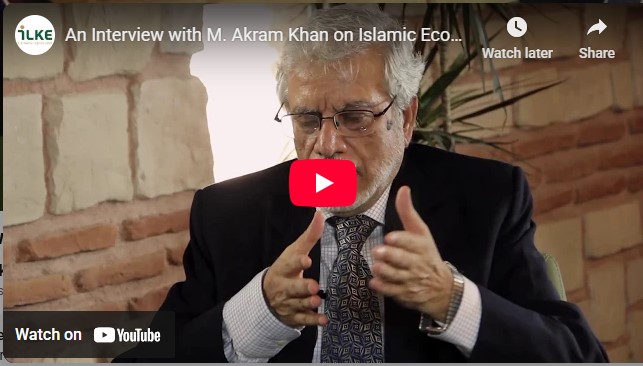
An Interview with Muhammad Akram Khan on Islamic Economics: