

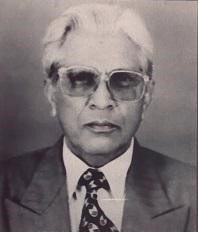
Mr. Muhammad Naseer Ahsan
Former Auditor-General of Pakistan
31-12-1990 to 30-12-1995
Family Background:
Mr. Muhammad Naseer Ahsan was born at Pratab Garh (United Provinces, India) in December 1930. His grandfather was a devout follower of Hazrat Haji Imdadullah Muhajir Makki, and his father followed the teachings of Maulana Ashraf Ali Thanvi, a legacy that profoundly influenced his values and principles.
Education:
After completing his education at the prestigious University of Lucknow in 1950, he migrated to East Pakistan. He attended various advanced courses on finance, management, and development in the country and abroad.
Professional Experience and Achievements:
In 1954, he joined Accounts Group by securing a distinguished position in the Central Superior Services Examination. He served the Defence Services of Pakistan as a Financial Advisor, Chief Controller of Military Accounts and finally as Military Accountant General. His life took a dramatic turn during the tragic events of 1971 in East Pakistan. Serving as Controller of Military Accounts in Dhaka, Mr. Ahsan was captured as a prisoner of war; he chose solidarity over privilege, standing shoulder to shoulder with fellow prisoners despite offers of comfort extended to civil service officers. In those bleak days, he demonstrated extraordinary fortitude, including burying a close relative with his own hands—a testament to his unyielding strength and humanity.
He held the positions of Director of Finance and Administration while on deputation at the Pakistan Council of Scientific & Industrial Research and the Rice Export Corporation of Pakistan, two significant public sector organisations in the nation. He also served as Director of Railway Accounts Academy, Quetta, a premier training institution for finance managers in the country. Moreover, he was also on the panel of auditors sent by Pakistan to the United Nations in 1969–70. He had a wealth of experience in corporate management, financial management, cost accounting, and public sector/international agency auditing. His professional career culminated with his appointment as the Auditor-General of Pakistan on December 31, 1990, a constitutional role that spanned five years.
One of his earliest realisations in this role was the disconnect of the Auditor-General’s office, which was then located in Lahore, from Islamabad, the nerve centre of policy formulation. Seeing the inefficiencies that resulted from this disconnect with the federal government, Mr. Ahsan advocated relocating the office to Islamabad. Although this move was met with strong opposition, it was ultimately determined that it was in the best interests of the country. In January 1993, the new building of the Auditor-General's office was inaugurated in Islamabad, and by February 1995, the transition was complete. This move symbolised a shift toward a collaborative and strategic approach to auditing and financial governance, one that has served the country well.
Since taking over as the head of SAI Pakistan, he brought a participative management style and a task-oriented culture within the organisation and went down the line to communicate with all tiers of managers and employees.
Under Mr. Ahsan’s leadership, the computerisation project of Accountant General Sindh moved forward in 1990-1991, bringing in automated systems for pensions, payroll, and accounts, thus significantly improving efficiency. The computerisation of District Accounts Offices in NWFP, supported by the World Bank, also advanced providing in-house computing facilities even at the district level.
Mr. Ahsan understood that true progress required nurturing human capital. He invested heavily in training and capacity building, ensuring that the institution he led would not only survive but thrive in a changing world. He played a pivotal role in advancing performance auditing in Pakistan through the Performance Audit Development, Training, and Implementation (PADTI) Project, a technical cooperation initiative between Pakistan and the Netherlands. In March 1991, he welcomed the Ambassador of the Kingdom of the Netherlands to discuss the progress made by the project.
The PADTI Project delivered substantial outcomes, including the creation of various performance audit guidelines, detailed case histories, and programme-specific evaluation frameworks. It introduced new standards for assessing the performance of services and organisations, refined existing guidelines, and developed extensive training materials. The project also introduced the Intensive Training Programme in Performance Auditing and produced a comprehensive manual to support the training of future trainers, significantly advancing the field of auditing.
The 1992 Diagnostic Consultancy, which was carried out with support from the International Development Association, was another highlight of Mr. Ahsen's tenure as Auditor-General. It assisted in determining which areas of the Department required improvement. The study envisaged a Strategic Information System Plan (SISP) aimed at improving the financial information produced during audit and accounting operations. The Plan envisaged extensive computerisation in the Department and a number of target applications were also identified for this purpose. This Diagnostic Study served as the basis for the Project to Improve Financial Reporting and Auditing, which foresaw the Department's human resource development as well as the widespread computerisation and use of information technology for repetitive tasks. It also anticipated the adoption of contemporary auditing standards, procedures, and methodologies in the government. To give final touches to this major milestone, he oversaw the World Bank/IDA Mission for final appraisal of PIFRA in March.
He attended the annual conventions of the International Consortium of Governmental Financial Management (ICGFM) in Australia in November 1991 and in Washington, D.C. in 1994. He served as the head of SAI Pakistan's delegation to the 1994 ICGFM conference on "Financial Management and Accountability in the Public Sector - Strategies for Managing Change," which was held in New Delhi. Attended by over 300 delegates from 20 countries, the conference was the first of its kind in Southeast Asia.
He also led a delegation to the XIV International Congress of Supreme Audit Institutions (INCOSAI) in Washington, D.C. in 1992. At this Congress, Pakistan’s Audit Department was recognised for its article on auditing human resources. It was a unique honour to be selected for contributing the best article in the International Journal of Supreme Audit Institutions, along with another article from the U.K. The award was received in the inaugural session amidst pageantry and applause by Mr. Muhammad Naseer Ahsan. In September 1995, he led another INCOSAI meeting in Cairo, Egypt, where Pakistan was chosen as the vice chairman for the sub-theme 'Role and Responsibilities of SAIs in the Audit of Environmental and Sustainable Development Issues'.
Mr. Ahsan was instrumental in strengthening regional cooperation through his pivotal role in the establishment of ECOSAI (Economic Cooperation Organisation Supreme Audit Institutions) during its first conference in Bhurban in 1994. Serving as the Secretary-General of ECOSAI, he contributed significantly to fostering regional collaboration in auditing. The participants included delegations from Afghanistan, Azerbaijan, Iran, Kazakhstan, Pakistan, Tajikistan, Turkey, Turkish Republic of Northern Cyprus and Turkmenistan. A permanent secretariat was established in Islamabad with the Auditor-General of Pakistan as its permanent Secretary General.
During his tenure, SAI Pakistan actively participated in the first meeting of the INTOSAI Working Group on Environmental Auditing, held in Luxembourg on April 25-26, 1994. This milestone event marked a global commitment to addressing environmental challenges through audit practices.
His tenure was marked by an acute understanding of the power of international collaboration. Mr. Ahsan forged strong bilateral relationships with countries like Turkey, Netherlands, China, Bangladesh, etc., which strengthened collaboration in performance audit practices and enhanced international relations. Under his leadership, the Department organised the third Pak-China Joint Seminar on “Audit of State-Owned Enterprises” in August 1995. His collaborations with international organizations like the World Bank and the Netherlands demonstrated his ability to think globally while acting locally, securing technical support that elevated Pakistan’s audit standards to meet international benchmarks.
In the area of professional development, Mr. Ahsan prioritised capacity-building programmes. In January-February 1995, he inaugurated the 24th Intensive Training Programme in Performance Auditing in Lahore, which included nineteen representatives from various Supreme Audit Institutions worldwide. He also prioritised gender sensitivity within the department and facilitated a workshop on gender analysis in May 1995.
In 1995, he also agreed to take on a vital monitoring assignment for the Social Action Programme (SAP), which involved making sure that the programme's initiatives were carried out efficiently at the district, provincial, and federal levels. His work on the SAP underscored his commitment to ensuring that the government initiatives translated into tangible benefits for the people of Pakistan. The preparatory phase for monitoring began on 23 January 1995, with a formal launching ceremony on 14 March 1995. The quality of work conducted under the Auditor-General's guidance received praise from both donors and the government. This monitoring helped verify the quality of work and ensured accountability. Mr. Muhammad Naseer Ahsan also headed the team auditing the Preparatory Commission for the OPCW, marking the second consecutive year SAI Pakistan undertook this vital responsibility.
Mr. Muhammad Naseer Ahsan, a man whose life was marked by service, resilience, and integrity, passed away on May 18, 2011. He left behind not only an enduring legacy but also a close-knit family—a son and two daughters—who continue to thrive in their respective lives, embodying the values he instilled in them. Beyond his professional achievements, Mr. Ahsan was a man of deep intellectual curiosity and cultural awareness. He admired the Bengali Muslims for their straightforwardness and fondly recalled his stay in East Pakistan. His life is more than a chapter in the history of Pakistan’s civil service; it is the story of a man who rose to meet every challenge with courage and grace. From Dhaka’s war-torn streets to Pakistan’s highest office of the Auditor-General, Mr. Muhammad Naseer Ahsan remained a beacon of hope and an example of what it means to serve with honour.